
Practical guide
Record box truck dimensions with clear reference points
Build a measured surface record without mistaking a conceptual area for a print template.
Read the guide: Record box truck dimensions with clear reference pointsChicago commercial vehicles & fleets
Turn the box body into a focused business introduction. Start with the actual panels and condition, then compare the coverage that belongs in your quote.
Guaranteed response within 2 hours.Free planning tools and buyer downloads below.
A clear scope before the spend.
Free box truck surface worksheet below. Use the result with any wrap shop.
More useful project detail
The surface worksheet helps organize area and construction. These guides explain how to collect dimensions, identify interruptions and distinguish a budget area from a production-ready survey.

A visual you can keep
Planning area and verified production references serve different jobs.
Use the planning example from Chicago Fleet Wraps, download a copy, or read the related project guides.
Practical guide
Build a measured surface record without mistaking a conceptual area for a print template.
Read the guide: Record box truck dimensions with clear reference pointsPractical guide
Record rivets, seams, repairs and substrates that affect the proposed installation.
Read the guide: Survey box body construction before graphics productionPractical guide
Make edges, doors, rails and exposed areas part of the written scope.
Read the guide: Define exactly where box truck coverage starts and stopsWhy put your business on a vehicle?
Make one business idea easy to pick out across a larger panel.
Give the rear doors their own readable layout around working hardware.
Include panel joins, rivets, repairs and access in the scope discussion.
A clear scope before a price
Vehicle size, covered areas, artwork, preparation, existing graphics and the proposed material system all belong in the price discussion.
Useful when the priority is a clear name, service and contact route.
Discuss this scopeCompare the exact panels, message and finish with the full-coverage option.
Discuss this scopeConfirm the included painted panels and any exclusions on the actual vehicle.
Discuss this scopeRequest a price for the actual vehicles and agreed coverage. The free tools below help you compare the assumptions.
Picture the possibilities
Look at the message, the coverage and the working views.
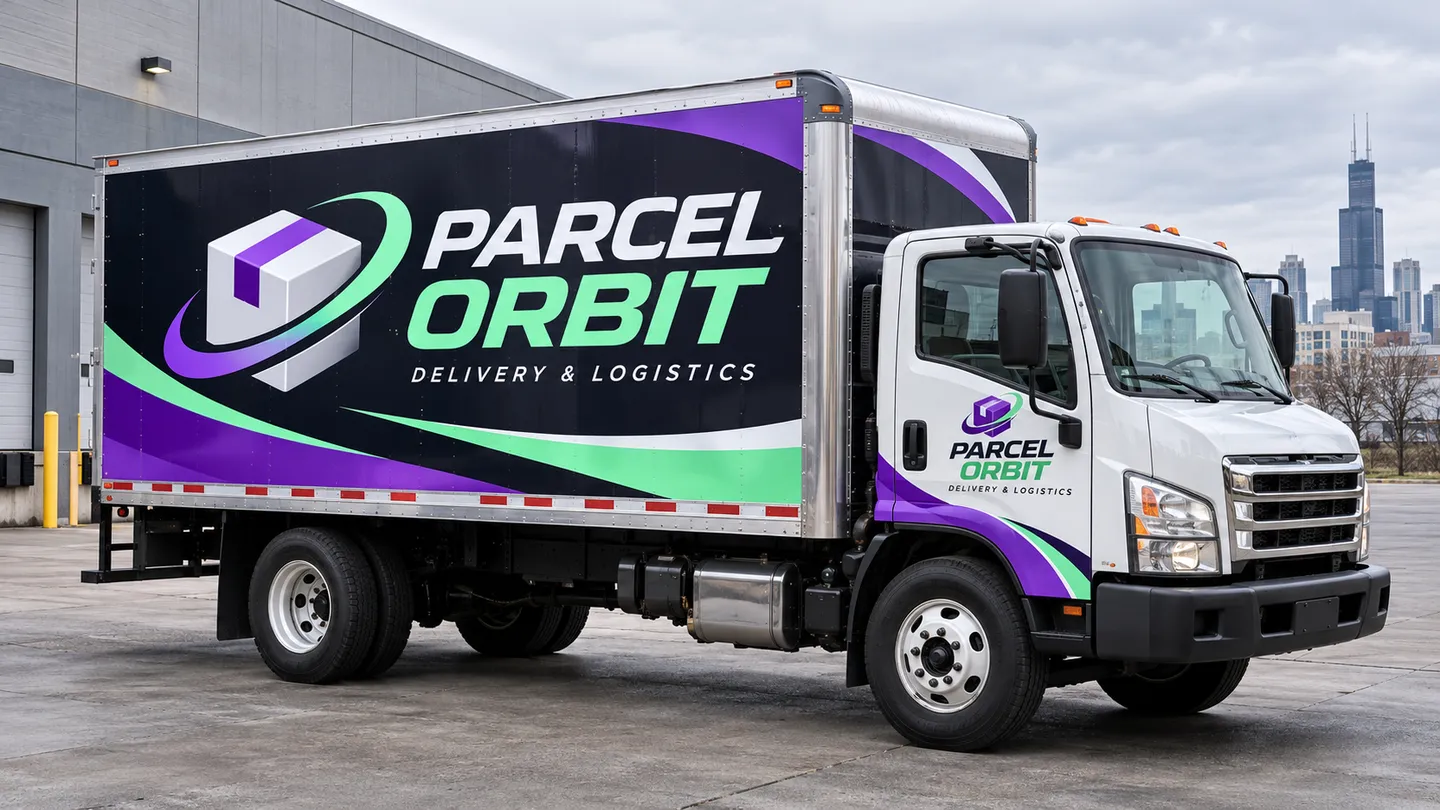
Parcel Orbit is a fictional business. These generated design concepts illustrate ideas to discuss for your vehicles.
Plan the graphics for your vehiclesLet’s talk vehicles
Tell us how many vehicles you have. We’ll follow up about the vehicles, coverage, design and timing.
Guaranteed response within 2 hours.Know the next step
Guaranteed response within 2 hours. Final project pricing and dates follow review of the scope.
Name, email, phone and vehicle count. Share the project context through the free tool if it is useful.
Discuss the actual vehicles, coverage, artwork, existing graphics and timing.
Check the written scope and vehicle-specific artwork, including the business wording and included surfaces.
Confirm scheduling, preparation, review and the applicable care information.
The free tool
Use the example values to explore, then replace them with your project details.
Use the tool without sharing contact details. Entering a valid email or phone in the inquiry form saves your project entries, filenames, analysis and selected original files, even if unfinished. Original files: up to 50 MB each and 200 MB per batch.
Rectangular planning areas before obstructions, trimming or production allowances.
| Surface | Dimensions | Area |
|---|---|---|
| Driver side | 192 × 96 in | 128 sq ft |
| Passenger side | 192 × 96 in | 128 sq ft |
| Rear | 96 × 90 in | 60 sq ft |
Area is conceptual. It is not a print template, material takeoff, bleed allowance or final quote.
Ready to discuss the vehicles? Get fleet pricing. Save your result to use in that conversation.
Free tools for a better buying decision
A 12-page workbook with generic wrap concepts and fillable worksheets for coverage, quote comparison, budget, fleet availability, artwork, proof approval and vehicle records. Use it with any wrap shop.
Fill it in electronically or print it. No email needed.
Take this to any wrap shop
Print it off so you remember to ask. A practical checklist covering scope, materials, artwork, preparation, scheduling, warranty and handoff, plus questions for this project.
Confidence comes from the details
Use these checks when you review a proposal, a proof or a wrap shop. Keep the answers with your project.
Print the wrap-shop questionsSee the tradeoff
Two 192 × 96 inch sides total 256 square feet before rear panels or obstructions.
Illustrative values, not a completed customer project.
Rectangular planning areas before obstructions, trimming or production allowances.
| Surface | Dimensions | Area |
|---|---|---|
| Driver side | 192 × 96 in | 128 sq ft |
| Passenger side | 192 × 96 in | 128 sq ft |
| Rear | 96 × 90 in | 60 sq ft |
Area is conceptual. It is not a print template, material takeoff, bleed allowance or final quote.
Leave with something useful
Record the side and rear panels. Calculate their rectangular area and flag the construction details a supplier needs.
Build my box truck worksheetBuild it from the project details you enter.
Keep the assumptions and open questions visible.
Copy, save or print the result for your next conversation.
Commercial wrap service
A box truck can be a suitable commercial graphics surface when the film, preparation, and installation method match its construction. Identify panel materials, rivets, corrugations, seams, and condition first. Suitable films exist for these features, but the proposed system and coverage need vehicle-specific review rather than a generic box-truck assumption.
The large side of a box truck can look like a simple rectangle, but its construction determines how a graphic needs to be specified and installed. Smooth panels, rivets, corrugations, seams, and rear hardware all deserve attention. The cab and box may also have different paint or repair histories. Use the body inspection to guide material choices and coverage before treating the available area as an uninterrupted advertising surface.
Begin by documenting what the box is made of and how its panels join. Painted metal, reinforced plastic, and other body materials can behave differently under a graphic. Include close photographs of rivets, corrugations, panel gaps, and repairs, alongside overall side views. A conformable cast film may suit complex features, but a product's own application guidance must support the chosen surface. The inspection should also identify coatings or contamination that may affect adhesion. Where needed, adhesion testing helps establish whether the proposed construction suits the actual body.
Large graphics still need to respect the structure beneath them. Map the main message across the usable side surface and review where seams, rivets, and body changes fall. Avoid placing critical small wording where interruptions make it difficult to read. Plan the rear separately, accounting for doors, latches, hinges, and loading equipment. The cab can carry supporting identity without copying the entire box layout at a much smaller scale. A vehicle-specific proof should make these relationships understandable before artwork is approved and production details are finalized.
A clean-looking truck may still have wax, residue, moisture, loose paint, or existing graphics that affect readiness. Discuss these conditions before agreeing the final installation plan. Cleaning must address seams and rivets as well as broad flat areas, and the surface needs to be dry. If repairs or paint work are required, allow the coating to cure according to its manufacturer's instructions. Schedule the truck after its preparation needs are understood so operational plans reflect the assessed work rather than assuming every box body is ready for immediate application.
Buy with the questions answered
Construction, rivets, seams, repairs, surface condition and rear-door hardware can change preparation and application needs. Supply photos and the actual body configuration for review.
Guaranteed response within 2 hours. The next conversation confirms the vehicle details, proposed coverage, artwork, existing graphics and timing so a project-specific scope can be discussed. Sending an inquiry does not reserve an installation date.
Review the covered surfaces, final business wording, vehicle-specific artwork, proposed material system, preparation and removal needs, price exclusions and agreed handoff. The free wrap-shop questions give you a record to use with any supplier.
Before you decide
For project-specific help, use the four-field inquiry form.
Get fleet pricingSuitable products are available for riveted commercial surfaces, but not every wrap film is designed for them. The material and installation method should match the rivet profile, surrounding panels, and intended graphic construction. Provide detail photographs so those features can be included in the assessment.
Read the detailed guide: Survey box body construction before graphics production
It still needs a condition and material check. Smooth panels may carry coatings, contamination, old adhesive, or paint problems that are not obvious in a distant photograph. Surface suitability is about adhesion and condition as well as shape, so broad flat sides should not be assumed ready without review.
Read the detailed guide: Survey box body construction before graphics production
A shared design can connect them visually, but their dimensions, surfaces, and interruptions differ. The cab may need a simpler arrangement of the main brand elements. Review each area on the actual truck and confirm the intended coverage rather than treating the whole vehicle as one flat sheet.
Read the detailed guide: Record box truck dimensions with clear reference points
Identify the repaired area and provide any available information about the coating and repair date. Paint must be sound and adequately cured, and the repaired surface may need separate evaluation. Do not assume the surrounding original panels and the repaired section will accept or release graphics in the same way.
Read the detailed guide: Record box truck dimensions with clear reference points
Some commercial films are designed for flat, riveted and corrugated surfaces. A box-truck body needs a material and installation specification that matches its construction.
3M sourceCast films are highly conformable for complex curves. Calendered films are generally used for flat surfaces or simple curves. The exact product specification still governs its suitable uses.
Avery Dennison sourceContamination and trapped moisture can undermine adhesion. Seams, crevices and areas beneath seals need attention as part of the final cleaning and drying process.
ORAFOL sourceNew paint must cure according to its manufacturer's instructions. Flaking paint, repairs and unsound finishes need assessment before installation or removal; a wrap is not a repair for failing paint.
3M sourceBox truck graphics planning is relevant to commercial vehicles operating in Chicago, Melrose Park, Franklin Park, and Bensenville, with project arrangements confirmed individually. Tell us about your vehicles.